
Primitive Reflexes Explained: A Guide for Practitioners, Parents and Teachers
What primitive reflexes are, what can happen when they’re retained, and how movement-based approaches like Brain Gym® can support reflex integration.
Every child develops in their own way and at their own pace.
Sometimes, though, a child works hard and still finds certain things more difficult than they should be: sitting still, holding a pencil, keeping their balance, or settling when they feel overwhelmed.
Many practitioners, teachers and parents are exploring one piece of this puzzle: the primitive reflexes. These are the very first movements we make, and they play an important part in how we grow, move and learn.
Primitive reflexes help us through birth and the first months of life. Ideally, they quietly step aside as the brain matures. When they don’t, they can leave a lasting imprint on posture, coordination, attention and emotional regulation.
Whether you're a practitioner deepening your reflex work, a teacher noticing patterns in the classroom, or a parent trying to make sense of your child's struggles, this guide covers the essentials.
What are primitive reflexes?
Primitive reflexes are automatic, involuntary movements that emerge in the womb and during early infancy. They are controlled by the brainstem, the oldest and most basic part of the brain, so they happen without any conscious thought.
Each reflex has a job. Some help the baby move down the birth canal. Others protect the newborn, support feeding, or build early muscle tone. Together, they lay the foundations for the movement patterns we rely on for the rest of our lives: rolling, crawling, sitting, standing and walking.
As the higher brain develops, these reflexes are meant to be integrated (sometimes called inhibited). They don't disappear. They're folded into more mature, voluntary movement, and the higher brain takes over the controls. For most reflexes this happens within the first year, with a few continuing into the toddler years.
Movement drives this process. Tummy time, rolling, and crawling all give the developing nervous system the input it needs to move from reflex to control.
What happens when a reflex is retained?
Sometimes a reflex doesn't fully integrate and stays active beyond its expected window. This is described as a retained or unintegrated reflex.
This can happen for many reasons. Common factors include a difficult birth, illness or stress in early life, limited floor time, or skipping developmental stages such as crawling.
A retained reflex is thought to keep the body running older, automatic patterns in the background, so simple tasks take more effort than they should. Depending on the reflex, this may show up as:
- Difficulty sitting still or maintaining posture
- Poor balance, coordination or spatial awareness
- Challenges with reading, writing or copying from the board
- Heightened anxiety, sensitivity or emotional reactivity
- Trouble with focus and attention
These signs are not a diagnosis. Each one can have many other causes, and research into retained reflexes is still developing. Reflex screening is best seen as one useful lens among several, alongside guidance from qualified health and education professionals.
Six key primitive reflexes at a glance
There are many primitive reflexes, but six come up again and again in reflex integration work. Integration ages vary between sources, so treat these timings as approximate.
| Reflex | What it does in infancy | Typically integrates by | Possible signs if retained |
|---|---|---|---|
| Moro | Startle response to sudden change | ~4–6 months | Anxiety, sensory sensitivity, overreacting |
| ATNR | Links head turning to arm and leg movement | ~6 months | Crossing the midline, handwriting, reading |
| STNR | Prepares the baby for crawling | ~9–11 months | Slumping at a desk, W-sitting, clumsiness |
| TLR | Responds to head position and gravity | up to ~3 years | Balance, muscle tone, motion sickness |
| Spinal Galant | Hip flexes when the lower back is stroked | ~9 months | Fidgeting, bedwetting, sensitive to waistbands |
| Palmar, Hands Pulling & Babkin | Grasping, pulling and the hand–mouth link | up to ~6 months | Pencil grip, fine motor control, mouth moving while writing |
Moro reflex
The Moro reflex is the baby's built-in alarm system. A sudden noise, light or loss of support triggers a dramatic startle: arms fling out, a sharp breath in, and often a cry.
When it lingers, the nervous system can stay on high alert. Children may be easily startled, anxious, sensitive to noise and light, or quick to overreact. In adults, it is often linked to a feeling of being constantly on edge.
Asymmetrical Tonic Neck Reflex (ATNR)
Often called the "fencer" reflex. When a baby turns their head to one side, the arm and leg on that side extend while the opposite limbs bend. It helps develop hand–eye coordination and early awareness of each side of the body.
Retained ATNR may make it hard to cross the body's midline. This can affect reading, tracking across a page, handwriting and copying from the board. Some children turn their page sideways or struggle to ride a bike.
Symmetrical Tonic Neck Reflex (STNR)
The STNR is a bridge reflex that helps a baby get up onto hands and knees. Lifting the head straightens the arms and bends the legs; lowering the head does the reverse.
When retained, children often slump at the desk, lie on the table to write, W-sit on the floor, or find it hard to copy from the board. Messy eating and clumsiness are also commonly noted. Babies who skipped crawling are often checked for this one.
Tonic Labyrinthine Reflex (TLR)
The TLR is the body's first response to gravity. Tipping the head forward curls the body; tipping it back straightens and stiffens it. It works closely with the vestibular (balance) system.
Retained TLR is associated with poor balance, low or uneven muscle tone, toe walking, motion sickness and difficulty judging space and distance.
Spinal Galant reflex
Stroking alongside a baby's lower spine causes the hip on that side to flex toward the touch. It is thought to help with movement through the birth canal and with early hip mobility.
In older children, a retained Spinal Galant is often linked to fidgeting, "ants in the pants" restlessness, sensitivity to tight waistbands or labels, and in some cases bedwetting beyond the usual age.
Palmar Grasp, Hands Pulling and Babkin reflexes
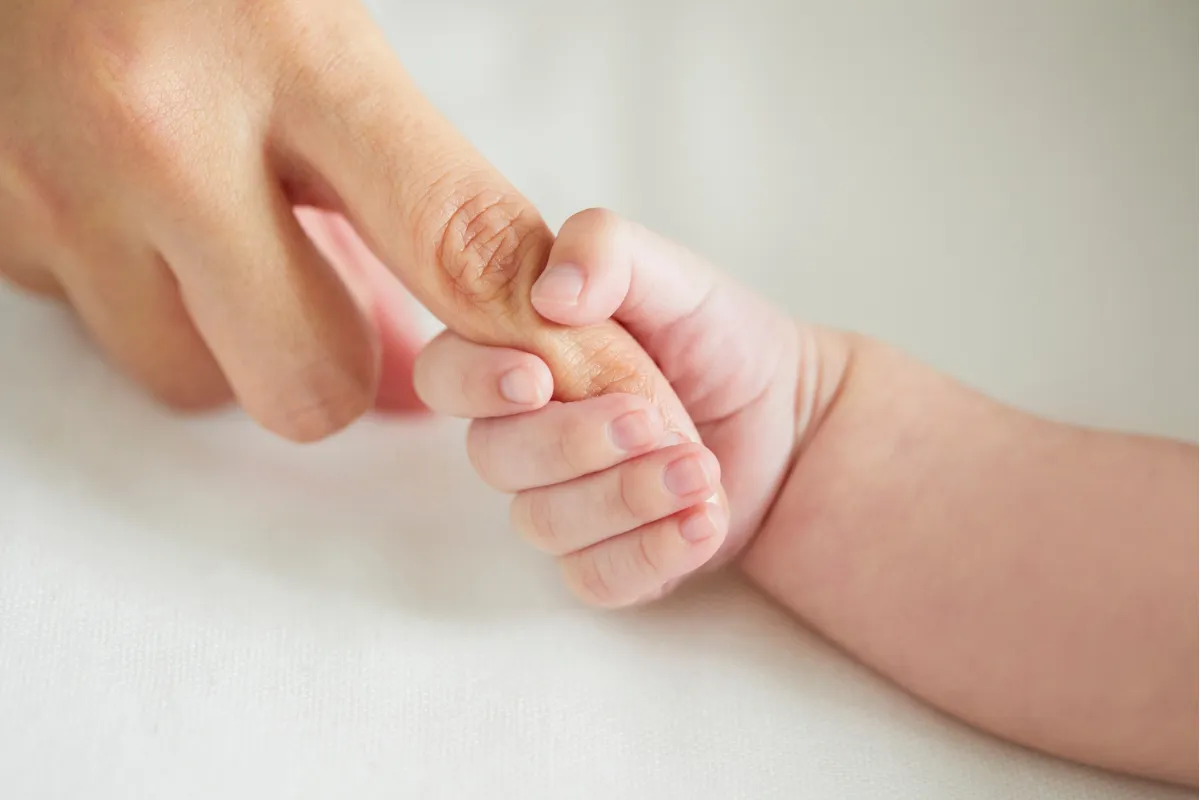
These three hand reflexes work as a team. Palmar Grasp makes a baby's fingers close around anything placed in the palm. Hands Pulling helps the baby grip and pull. Babkin links pressure on the palms with the mouth opening, tying hand and mouth together for feeding.
When these are retained, you may see an awkward pencil grip, tired hands, poor fine motor control, or the mouth and tongue moving while a child writes or cuts.

A guide for every reflex
Each reflex above has its own Interactive Guide, with play-based, step-by-step exercises to support integration. They're a simple starting point for parents and teachers, and a handy take-home resource for practitioners.
View the Interactive Guides →
Why movement matters
If movement is what integrates reflexes in the first place, movement is also the natural way to revisit them. Most reflex integration approaches use gentle, repetitive movements that echo the ones a baby makes in the womb and in early infancy. The aim is to give the nervous system a second chance to complete what was missed.
Two approaches you'll find across our range:
- Brain Gym® uses simple, purposeful movements such as Cross Crawl, Lazy 8s and Hook-ups to support whole-brain learning and readiness. Its activities sit comfortably alongside reflex work in clinics, classrooms and homes.
- Rhythmic Movement Training International (RMTi) uses rhythmic, often passive movements based on infant development, along with isometric reflex integration exercises. It is widely used by practitioners and parents.
The common thread is short, regular practice. A few minutes a day, done consistently and kept playful, is usually more effective than long sessions. Go at the child's pace, and if an activity causes distress or fatigue, stop and come back to it later.
Which resource is right for you?
Our Primitive Reflexes collection has something for every stage of the journey, from first discovery to clinical practice.
For parents
Start with the Interactive Guide for the reflex you're most curious about. Each one explains the reflex in plain language and gives you short, step-by-step activities you can do at home, no equipment needed.
For the bigger picture, Beyond the Sea Squirt by Moira Dempsey is a warm, accessible introduction to reflexes and RMTi, told through real family stories. Limitless: Integrate Primitive Reflexes by Dr Josh Madsen offers practical steps and activities to help parents assess and integrate reflexes.
For teachers and educators
The Interactive Guides use simple, play-based exercises that can fit into a movement break or classroom routine.
Movement Matters by Moira Dempsey connects current neuroscience with RMTi's clinical experience. It explains why some students still struggle despite support, and how movement can help with attention, coordination and reading.
For practitioners
Reflexes, Movement, Learning & Behaviour by Sally Goddard Blythe (3rd edition, 2023) is the go-to reference. It covers each reflex's neurological pathways, how to test for retained reflexes, a scoring system, and remediation options, including Brain Gym®.
Pair it with Movement Matters for the RMTi perspective, and keep the full set of Interactive Guides on hand as take-home resources for families. Kinesiologists may also find the Primitive Reflexes Test Kit a useful addition to their balancing work.
| Resource | Format |
|---|---|
| Interactive Guide: Moro | Activity guide |
| Interactive Guide: ATNR | Activity guide |
| Interactive Guide: STNR | Activity guide |
| Interactive Guide: Palmar, Hands Pulling & Babkin | Activity guide |
| Interactive Guide: Spinal Galant | Activity guide |
| Interactive Guide: TLR | Activity guide |
| Beyond the Sea Squirt | Book |
| Limitless | Book |
| Movement Matters | Book |
| Reflexes, Movement, Learning & Behaviour | Book |
Frequently Asked Questions
Start your reflex integration journey
Primitive reflexes are where movement, learning and emotion first meet. Understanding them can change how you see the child who can't sit still, the student who struggles to write, or the client who is always on edge.
Whether you're just discovering reflexes or building them into your practice, our curated range will help you take the next step.

Primitive Reflexes Collection
From play-based Interactive Guides for home and the classroom to in-depth references for practitioners, explore our full range of reflex integration resources.